First Day in Antarctica: A Submarine Dive and Gentoo Penguins at Couverville Island
I've done exactly one submarine dive in my life, and it happened in Antarctica, which sounds like the start of an incredible story. Mostly it was cold and dark, and there wasn't a whole lot to see.
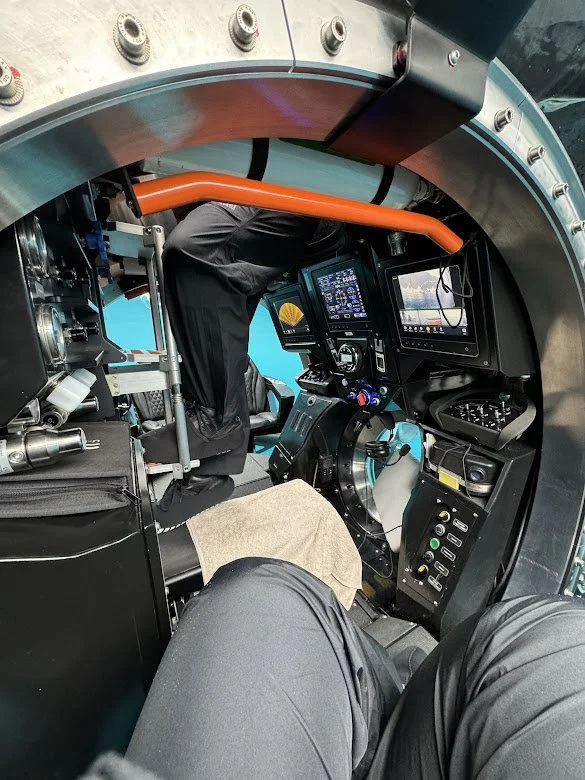
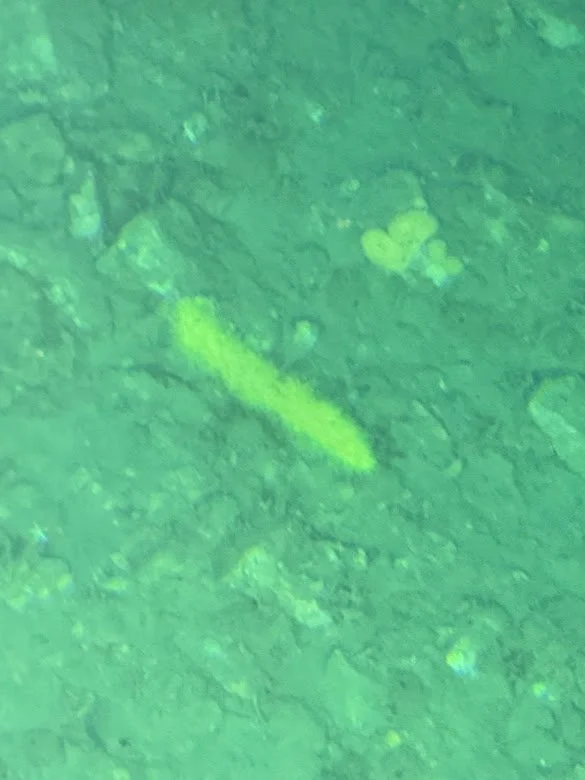
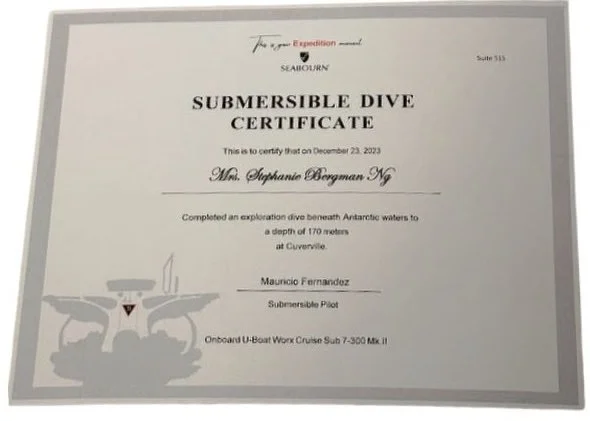
Seabourn doesn't offer the submarine excursion anymore, and honestly, I think that's the right call. Ours went to 170 meters, and even with the lights on, visibility was minimal — some things growing on the rock, a few small creatures, not much else. It makes sense when you think about it: freezing water, no sunlight that deep, not a lot of life down there to find. Still, it was my one and only submarine ride, and for that alone, it was worth doing.
The submarine cost us time on land, though. Once we surfaced, the Zodiac took us straight to the landing at Couverville Island, where the rest of our group had already been out exploring for a while. We hurried to catch up.
Stepping onto land, it looked exactly like the Antarctica I'd always pictured — snowing, white, cold, gray. One thing I hadn't thought about ahead of time: there is no green anywhere. None. It's all rock, and even the rock reads as white, gray, and black. The water is so cold it looks almost black, with white ice floating on top of it like something out of a photo you'd assume had been edited.
We'd spent the two sea days before this one in a run of lectures, and one of our favorites was from Brent Houston, a penguin biologist we adored getting to know over the following weeks. He'd given a whole presentation on the penguin species we'd see on this trip, and it turned out he was on the island with us that morning. We found him fast.
Couverville Island had several thousand Gentoo penguins, all in the middle of building nests, which mostly meant stealing pebbles from each other. A better nest apparently means a better shot at impressing a mate, so nobody was shy about grabbing a rock the second a neighbor looked away. Skuas circled overhead the whole time, looking for a chance to steal an egg. At this point in the trip, eggs were all we saw. Penguins incubate for 35 days, and we were still early enough that nothing had hatched yet. That came later.
In the afternoon, we went back out for a Zodiac cruise and saw chinstrap penguins for the first time. One submarine dive and two penguin species, in a single day. At the time, it felt like the most extraordinary day of my life. Looking back at everything that came after, it wasn't even close to the best day of the trip — I just had no way of knowing that yet.
This was also my first real taste of what expedition mornings actually look like. Excursions started before 7am, and the ship split into four color-coded groups so everyone landed in smaller batches. We were Red. You'd hear it over the intercom — "Red team, please head down to the mud room" — and that was your cue to move. The smart people napped between the morning and afternoon excursions. I am not a napper, so I was exhausted for most of this trip. Worth every tiring minute of it!
